

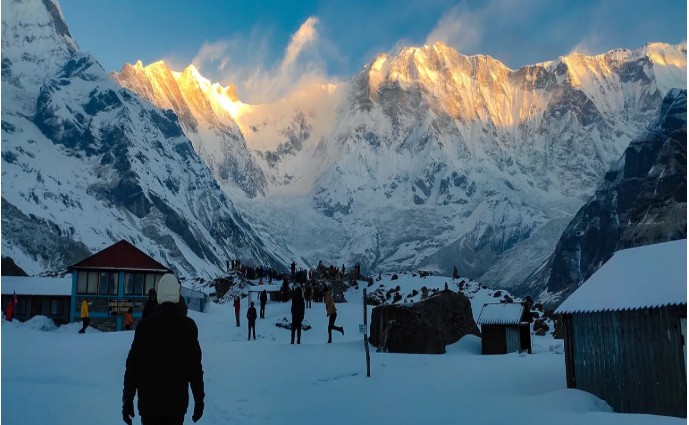

The Annapurna Base Camp Trek is one of Nepal’s most rewarding Himalayan journeys, offering a perfect combination of spectacular mountain scenery, diverse landscapes, traditional villages, and local culture. The trail takes trekkers from lush foothills and terraced farmland into the impressive Annapurna Sanctuary, where towering Himalayan peaks surround the base camp.
Compared with some of Nepal’s longer Himalayan adventures, the Annapurna Base Camp Trek can be completed in a relatively short period. However, the changing altitude, steep stone steps, and long walking days still require good preparation and a sensible pace.
Choosing the right Annapurna Base Camp Trek Itinerary is especially important. A well-planned itinerary allows you to enjoy the scenery while giving your body enough time to adjust to the increasing elevation.
Why Choose the Annapurna Base Camp Trek?
The Annapurna region is known for its remarkable variety. During the trek, the landscape changes from subtropical forests and rice terraces to rhododendron forests, alpine valleys, and snow-covered mountains.
The journey also provides opportunities to experience the traditions and hospitality of local communities, particularly Gurung and Magar villages.
Some of the major highlights include:
- Spectacular views of Annapurna and Machapuchare
- Walking through traditional mountain villages
- Beautiful rhododendron and bamboo forests
- Natural waterfalls and mountain streams
- Traditional teahouse experiences
- Sunrise and sunset views over the Himalayas
- Exploring the Annapurna Sanctuary
- Reaching Annapurna Base Camp at approximately 4,130 meters
Annapurna Base Camp Trek Itinerary
A standard Annapurna Base Camp Trek Itinerary generally takes around 7 to 12 days, depending on the starting point, transportation, route, and trekking pace.
The following is an example of a comfortable itinerary.
Day 1: Kathmandu to Pokhara
Your journey begins with travel from Kathmandu to Pokhara, one of Nepal’s most popular tourist destinations.
Pokhara is surrounded by beautiful hills and mountains and serves as a major gateway for treks in the Annapurna region.
After arriving, you can relax, explore the lakeside area, and prepare for the trekking days ahead.
Day 2: Pokhara to Ghandruk and Trek to Chhomrong
The trek begins with transportation toward the trailhead, followed by a hike through beautiful countryside and traditional settlements.
Ghandruk is a famous Gurung village known for its mountain views and cultural heritage. From the area, the trail continues toward Chhomrong, an important village on the route to Annapurna Base Camp.
The landscape becomes increasingly mountainous as you progress.
Day 3: Chhomrong to Bamboo
From Chhomrong, the trail descends toward the Chhomrong Khola before climbing through dense forests.
The route passes through small settlements and lush vegetation, with bamboo, rhododendron, and other forest species surrounding the trail.
After several hours of walking, you reach Bamboo for an overnight stay.
Day 4: Bamboo to Deurali
The trail continues deeper into the Annapurna Sanctuary.
As you gain elevation, the forest gradually becomes thinner and the landscape begins to feel more alpine.
The route passes through areas such as Dovan and Himalayan before reaching Deurali.
This section involves steady climbing, so maintaining a comfortable pace is important.
Day 5: Deurali to Annapurna Base Camp
This is the highlight of the Annapurna Base Camp Trek.
From Deurali, the trail continues toward Machapuchare Base Camp before entering the spectacular Annapurna Sanctuary.
As you approach Annapurna Base Camp, the surrounding peaks become increasingly dramatic. The feeling of being enclosed by enormous Himalayan mountains makes this one of the most memorable moments of the trek.
Annapurna Base Camp sits at approximately 4,130 meters above sea level.
After exploring the area and enjoying the mountain scenery, you spend the night near Base Camp.
Day 6: Annapurna Base Camp to Bamboo
After experiencing sunrise over the surrounding mountains, you begin the descent.
The trail follows much of the same route back through the Annapurna Sanctuary and forested sections.
Descending can be easier on the lungs because of the lower elevation, although the steep steps can still be demanding on the knees and legs.
You eventually reach Bamboo for the night.
Day 7: Bamboo to Jhinu Danda
The trail continues toward lower elevations, passing through forests and traditional settlements.
Jhinu Danda is particularly popular because of the natural hot springs nearby. After several days of trekking, relaxing in the warm water can be a welcome way to recover.
The area also provides beautiful views of the surrounding hills.
Day 8: Jhinu Danda to Pokhara
Your final trekking section takes you toward the roadhead, where transportation can take you back to Pokhara.
Once you arrive in Pokhara, you can relax and enjoy the city after completing your Himalayan adventure.
Depending on your travel schedule, you can spend an additional night in Pokhara or continue your journey.
Optional Extra Days
The length of the Annapurna Base Camp Trek Itinerary can be extended if you prefer a slower pace.
Additional days can be useful for:
- Spending more time in traditional villages
- Enjoying shorter walking days
- Taking photographs
- Exploring Pokhara
- Allowing greater flexibility for weather
- Recovering after demanding trekking days
A longer itinerary is often preferable for travelers who want to enjoy the journey rather than rush toward Base Camp.
Difficulty of the Annapurna Base Camp Trek
The Annapurna Base Camp Trek is generally considered a moderate-level trek.
Technical mountaineering skills are not normally required, but trekkers should be prepared for long walking days, steep sections, uneven trails, and considerable stone staircases.
Physical preparation can include:
- Regular walking
- Hill hiking
- Stair climbing
- Cardiovascular exercise
- Leg and core strengthening
- Longer weekend hikes
You should gradually increase your walking distance before the trip rather than attempting intense training immediately before departure.
Altitude and Acclimatization
Annapurna Base Camp is located at approximately 4,130 meters, so altitude should be taken seriously.
Although the route is relatively short, the elevation increases significantly during the journey. Walking slowly, staying hydrated, eating regularly, and allowing your body time to adjust can make the trek more comfortable.
If you develop persistent or worsening symptoms associated with altitude, do not ignore them. Descending and seeking appropriate medical assistance may be necessary in serious cases.
Best Time for the Annapurna Base Camp Trek
Spring and autumn are generally considered the most favorable trekking seasons.
Spring, from March to May, brings warmer conditions and beautiful rhododendron blooms.
Autumn, from September to November, is popular for generally clear skies and excellent mountain visibility.
Winter can be cold, particularly at higher elevations, while the monsoon season can bring heavy rainfall, muddy trails, and cloudier mountain views.
The best season ultimately depends on your preferences, experience, and tolerance for different weather conditions.
What to Pack for the Trek
Packing appropriately is essential for comfort throughout the journey.
Important items can include:
- Comfortable trekking boots
- Warm base layers
- Waterproof jacket
- Trekking trousers
- Insulating jacket
- Warm gloves and hat
- Sleeping bag
- Sunglasses
- Sunscreen
- Trekking poles
- Reusable water bottle
- Headlamp
- Basic first-aid supplies
- Personal medications
- Power bank
- Comfortable backpack
Your equipment should be adjusted according to the season and expected temperatures.
Key Points to Remember
Before beginning your Annapurna Base Camp Trek, keep these important points in mind:
- Choose an itinerary that matches your fitness level.
- Allow enough time to enjoy the trail without rushing.
- Prepare physically before the trek.
- Maintain a steady pace, especially at higher elevations.
- Stay hydrated and eat regular meals.
- Carry appropriate clothing for changing mountain weather.
- Take altitude-related symptoms seriously.
- Spring and autumn are generally the most popular trekking seasons.
- Keep some flexibility in your schedule for weather and transportation.
- Respect local communities, culture, wildlife, and the natural environment.
Conclusion
The Annapurna Base Camp Trek is an unforgettable journey through some of Nepal’s most beautiful Himalayan landscapes. From traditional villages and green forests to the dramatic Annapurna Sanctuary, every section of the trail offers a unique experience.
A carefully planned Annapurna Base Camp Trek Itinerary allows trekkers to experience these landscapes at a comfortable pace while managing the physical demands of the journey. Whether you choose a shorter itinerary or add extra days for relaxation and exploration, proper preparation and sensible pacing are essential.
The true reward of the trek is not simply reaching Annapurna Base Camp. It is the complete experience—the mountain views, local culture, peaceful forests, challenging trails, and memories created along the way. With the right preparation and a well-designed itinerary, the Annapurna Base Camp Trek can be a truly memorable Himalayan adventure.