

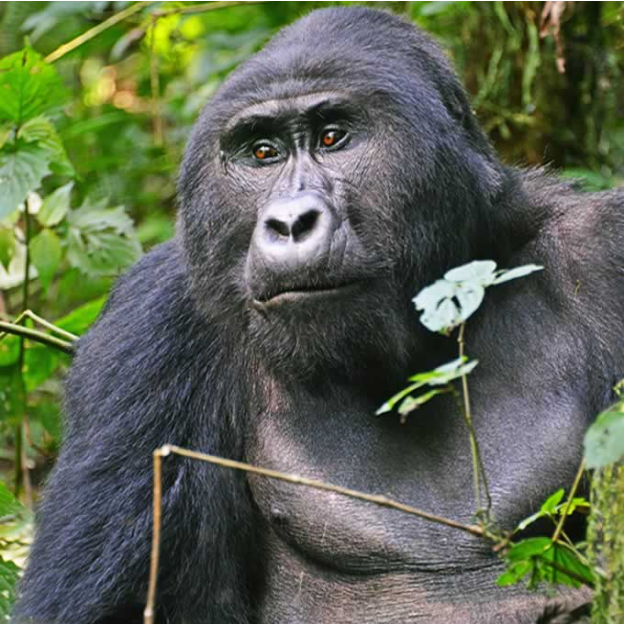

Africa offers two wildlife encounters that sit at opposite ends of the experience spectrum. One is the Great Wildebeest Migration, a moving sea of animals that stretches across the horizon on the plains of Tanzania and Kenya. The other is a quiet hour in a misty mountain forest, sitting a few meters from a family of mountain gorillas in Rwanda or Uganda.
One is about scale, noise, and drama. The other is about intimacy, stillness, and connection. Together they make one of the most complete wildlife journeys on the planet. This guide explains each experience, when to go, how to link the two, and how to plan a trip that does both justice.
Understanding the Great Wildebeest Migration
The migration is a continuous, year-round circuit of roughly 1.5 million wildebeest, accompanied by hundreds of thousands of zebras and gazelles. The herds travel through the Serengeti ecosystem in Tanzania and into Kenya’s Maasai Mara, following the rains and the fresh grass that comes with them. It is not a single event on a single date, but a rolling movement shaped by weather.
The Migration Through the Year
- January to March: The herds gather on the short-grass plains of the southern Serengeti and Ndutu area. This is calving season, when a vast number of calves are born in a few weeks, and predators such as lions, hyenas, and cheetahs take advantage.
- April to May: As the grass dries, the herds start moving north and west through the central and western Serengeti. The long rains bring lush scenery and fewer visitors.
- June to July: The animals approach the Grumeti River, where crocodiles lie in wait at crossing points.
- July to October: The herds reach the northern Serengeti and the Mara River, then cross into the Maasai Mara. The dramatic river crossings that feature in wildlife documentaries take place in this window.
- November to December: The short rains pull the animals south again, and the cycle begins anew.
Weather varies every year, so treat these months as a guide rather than a guarantee. A good operator will track the herds closely and adjust your camp location accordingly.
Why the Migration Is So Compelling
The wildebeest are only part of the story. The migration drives an entire ecosystem. Predators follow the herds, scavengers circle overhead, and the grasslands are shaped by the grazing. Watching thousands of animals gather at a riverbank, hesitate, and then plunge in all at once is an experience that photographs rarely capture fully.
Understanding Gorilla Trekking
Mountain gorillas live in just a few forested areas of Central and East Africa, in the Virunga Mountains and in Uganda’s Bwindi Impenetrable National Park. They remain endangered, but decades of conservation work, anti-poaching efforts, and community involvement have helped their numbers grow. Gorilla tourism plays a direct role in that success, because permit fees fund protection and give local communities a stake in the animals’ survival.
Where to See Mountain Gorillas
- Rwanda (Volcanoes National Park): Close to Kigali, with relatively short transfers and a well-organized trekking system. A good choice for travelers with limited time.
- Uganda (Bwindi Impenetrable National Park and Mgahinga): Bwindi offers dense, ancient forest and a large number of habituated gorilla groups. Permits are generally priced lower than in Rwanda.
- Democratic Republic of Congo (Virunga National Park): A more remote option, with security and access conditions that need careful checking before travel.
It is important to know that mountain gorillas are not found in Tanzania or Kenya. Combining the migration and gorillas therefore means visiting two or more countries in a single journey.
What a Gorilla Trek Is Like
Trekking groups are small, usually limited to eight visitors per gorilla family per day. After a briefing, guides and trackers lead you into the forest, and the hike can last anywhere from under an hour to several hours depending on where the gorillas spent the night. Once you find the family, you are typically allowed one hour with them. You will be asked to keep a respectful distance, avoid flash photography, and stay quiet. The gorillas often carry on feeding, grooming, or playing with little concern for their visitors.
Many travelers describe it as emotional. The eye contact and the sheer presence of an adult silverback are hard to forget.
Best Time to Combine the Migration and Gorillas
The good news is that the two experiences overlap in their best season.
June to September is the dry season in Rwanda and Uganda, which makes forest trails less muddy and trekking easier. It also covers the Mara River crossings in northern Tanzania and Kenya. This is the most popular window for combining the two, so book early.
December to February is another dry period for gorilla trekking and coincides with the start of calving season in the southern Serengeti. It is a strong alternative if you want newborn animals and predator action.
March to May and October to November are the main rainy periods in the gorilla regions. Trekking is still possible, but trails are wetter and more challenging. These months often come with lower rates and fewer travelers.
Suggested Itinerary: A 12-Day Combination Trip
This sample route can be adjusted to your budget and interests.
- Days 1 to 2: Arrive in Arusha, Tanzania, and transfer to a lodge. Visit Tarangire National Park for elephants and baobab trees.
- Day 3: Travel to the Ngorongoro highlands and enjoy views over the crater.
- Day 4: Spend a morning in Ngorongoro Crater, then continue toward the Serengeti.
- Days 5 to 7: Explore the Serengeti, positioning your stay near the herds according to the season. If it is July to September, head north for river crossings.
- Day 8: Fly back to Arusha, then connect onward toward Kigali or Entebbe.
- Days 9 to 11: Spend your time in Rwanda or Uganda, with one gorilla trek and time to recover and relax. Consider adding golden monkey tracking or a visit to a local community.
- Day 12: Fly home from Kigali or Entebbe.
Practical Planning Tips
Book gorilla permits early. Permits are limited and sell out, especially in the dry season. Securing them first lets you build the rest of the trip around your trekking date.
Check the fitness requirements. Treks can be strenuous, with steep, muddy terrain at altitude. Porters are available and highly recommended, both for support and to provide local income.
Mind the age limit. Most gorilla trekking has a minimum age, commonly 15 years, so families with younger children should plan accordingly.
Confirm entry and health rules. Each country has its own visa and health requirements, and some may ask for yellow fever documentation depending on your travel history. Check well ahead of departure.
Do not trek when ill. Gorillas are vulnerable to human diseases, so visitors with colds or other illnesses may be refused entry. Many parks also require face masks near the animals.
Pack appropriately. Bring waterproof layers, sturdy hiking boots, gloves for gripping vegetation, long trousers, and insect protection. For the migration, add binoculars, sun protection, and a warm layer for early mornings.
Choose a reputable operator. Look for companies with experience in multi-country itineraries, transparent pricing, and responsible tourism practices.
Traveling Responsibly
Both experiences depend on healthy ecosystems and engaged communities. Choose operators that employ local guides, support conservation projects, and follow park rules on distance and behavior. Avoid single-use plastics where possible, and remember that Tanzania bans plastic bags.
Conclusion
The wildebeest migration and gorilla trekking are two of the most powerful wildlife experiences anywhere, and they complement each other perfectly. One shows you nature at its most vast and dramatic, and the other shows you its quiet, tender side. By timing your trip for the dry months, securing gorilla permits early, and working with an experienced multi-country operator, you can bring both into a single, unforgettable journey. Allow enough days to avoid rushing, keep your plans flexible, and you will return with memories of both the plains and the forest.
Key Takeaways
- The Great Wildebeest Migration is a year-round movement of about 1.5 million wildebeest across Tanzania and Kenya, not a single event.
- Mountain gorillas live in Rwanda, Uganda, and the DRC, and not in Tanzania or Kenya, so a combined trip means crossing borders.
- June to September offers the best overlap, with Mara River crossings and dry conditions for gorilla trekking.
- January to March is a strong alternative for calving season and a second dry window for gorillas.
- Gorilla permits are limited, so book them before building the rest of your itinerary.
- Treks require reasonable fitness, and a minimum age usually applies.
- Responsible operators and permit fees help fund conservation and benefit local communities.
Frequently Asked Questions
- Can I see the wildebeest migration and gorillas on the same trip? Yes. They are in different countries, so you need to combine Tanzania or Kenya with Rwanda or Uganda, usually by flying between them. A trip of ten to fourteen days works well.
- Are there gorillas in Tanzania or Kenya? No. Mountain gorillas live in Rwanda, Uganda, and the DRC. Tanzania offers chimpanzees in Mahale and Gombe, but not gorillas.
- What is the best month to combine both experiences? July to September is the most popular option, because the Mara River crossings happen then and gorilla trails are drier.
- When is the best time to see river crossings? They generally take place from July to October in the northern Serengeti and Maasai Mara, though exact timing depends on the herds and the weather.
- How long do I get with the gorillas? Visitors are normally allowed one hour once the gorilla family is found, and groups are small to limit disturbance.
- How difficult is gorilla trekking? It varies. Some treks are short, while others take several hours over steep, muddy ground at altitude. Hiring a porter and wearing proper footwear makes a big difference.
- How early should I book gorilla permits? As early as possible, especially for the dry season. Many travelers book several months to a year ahead.
- Can children go gorilla trekking? Most parks set a minimum age, commonly 15 years, so check the rules before planning a family trip.
- Do I need vaccinations? Requirements depend on the countries you visit and your travel history. Malaria precautions are advisable, and yellow fever documentation may be required. Speak to a travel health professional several weeks before departure.
- Is gorilla trekking good for conservation? Yes, when run responsibly. Permit fees fund anti-poaching work and park management, and they provide income for local communities, which helps protect the gorillas and their habitat.